By Cassidy McWherter
Updated October 2026
Should you buy a new construction home or a resale home in Minneola?
The right answer depends on the specific properties, your budget, and your timeline. New construction can give you newer systems, current floor plans, and opportunities to select finishes. A resale home lets you evaluate an existing property and may already include features you would otherwise pay to add.
Neither option automatically delivers the better value.
As a Central Florida real estate agent and mom of three, I want buyers to compare how a home will work after moving day. That means looking at the finished price, ongoing expenses, condition, neighborhood, and the routes you will use every week.
Here is how I recommend comparing new construction and resale homes in Minneola.
Start With the Actual Home, Not Just the Category
“New construction” can mean a completed inventory home, a home still under construction, or a home built after you select a lot and plan. Those options can have different timelines and levels of customization.
“Resale” can mean a recently built property with newer systems or an older home that needs repairs. The age alone does not tell you how much work it will need.
Before deciding, compare homes with similar size, layout, lot characteristics, and location. Otherwise, you may be comparing differences in the properties rather than the benefits of buying new or resale.
Consideration | New construction | Resale |
|---|---|---|
What you can inspect before buying | Depends on whether the home is completed or being built | The existing home and its current condition |
Finish choices | May be available, depending on the stage and builder | Existing finishes; changes generally happen after purchase |
Move-in planning | Depends on completion, approvals, financing, and contract terms | Depends on seller timing, inspections, financing, and contract terms |
Major systems | Newly installed, but still need evaluation | Age, service history, and condition vary |
Outdoor features | May require additional spending | May already include fencing, landscaping, or a pool |
Neighborhood setting | May include ongoing construction and future phases | Existing surroundings can be evaluated, with future plans still worth checking |
Negotiation | May involve price, upgrades, financing incentives, or closing costs | May involve price, repairs, credits, and closing costs |
1. Compare the Finished Price, Not the Starting Price
A builder's advertised starting price is a starting point for questions. Ask for an itemized quote for the actual home and lot you want.
Confirm whether it includes a lot premium, structural options, design selections, appliances, and the finishes you saw in the model home. A model can show features that are optional or unavailable on a particular inventory home.
Then consider what you will need after closing: window coverings, a fence, storage, additional landscaping, or outdoor living improvements.
For resale, compare the purchase price with inspection findings and the changes you want to make. A home with an existing pool or finished backyard may be attractive, but you still need to evaluate its condition and maintenance costs.
A Hypothetical Cost Comparison
These figures illustrate the method only. They are not Minneola market prices, builder quotes, or contractor estimates.
Cost item | New construction example | Resale example |
|---|---|---|
Starting or agreed home price | $450,000 | $470,000 |
Lot premium | $15,000 | Included in purchase price |
Selected upgrades | $25,000 | — |
Planned initial work or additions | $10,000 | $15,000 |
Combined price and planned additions | $500,000 | $485,000 |
Closing costs, financing, taxes, insurance, association charges, and contingencies are excluded. Some additions may require separate cash rather than being financed with the purchase.
The point is to compare a realistic finished home with another realistic finished home. Then evaluate the monthly costs separately.
2. Read Builder Incentives Alongside the Loan Terms
A builder incentive can be valuable, but its headline amount does not tell you the entire financial story.
Ask what the incentive pays for, whether it requires a particular lender or title provider, whether it applies to your selected home, and what deadlines or eligibility conditions apply.
If financing is involved, request written loan comparisons. The Consumer Financial Protection Bureau's Loan Estimate comparison guide explains how to compare rates, lender costs, credits, and other terms.
Review comparable offers using the same loan type, down payment, and rate-lock assumptions.
Ask the lender to explain whether an advertised payment reflects a temporary buydown, a permanent rate reduction, or another arrangement. For a temporary benefit, review the payment after it ends as well as the initial payment.
A resale seller may also agree to eligible closing-cost assistance, subject to negotiation and loan-program limits. Compare the complete written offers before deciding which one works better.
3. Budget for Taxes, HOA Charges, and Any CDD Assessments
Two similarly priced homes can carry different ongoing expenses.
For each property, review:
- Estimated property taxes after purchase.
- Current HOA dues and what they cover.
- Applicable CDD or other non-ad valorem assessments.
- Insurance quotes and deductibles.
- Maintenance and utility expectations.
Minneola's official CDD page identifies the Founders Ridge and Hills of Minneola districts. Verify whether the specific parcel falls within a district and obtain its current assessment information. A home being new does not, by itself, establish whether it has a CDD charge.
Do Not Use the Seller's Tax Bill as Your Future Budget
The Lake County Property Appraiser warns buyers against relying on the seller's existing taxes as their future obligation because a change of ownership can trigger reassessment.
For new construction, also confirm whether a displayed tax figure reflects the completed home or an earlier assessment of the parcel.
Use the county's tax estimation calculator as a starting point, read its assumptions, and separately verify assessments it does not capture. Ask the lender how it is estimating escrow for the completed property.
4. Match the Timeline to Your Move
Start with your required move-in date.
A completed new home can have a different schedule from a home that has not begun construction. Ask what remains before closing, including construction work, inspections, approvals, and financing.
For a home being built, discuss how you would handle a delay. Temporary housing, storage, a lease extension, and extra moves can change your overall budget.
For resale, clarify seller possession, repair work, financing, and closing conditions. An existing home may make it easier to evaluate readiness, but the closing date still depends on the transaction.
If you must sell your current home first, have the applicable sale contingency and deposit provisions explained before signing. Do not assume the builder and resale contracts treat that situation the same way.
5. Plan Inspections for Both Options
I recommend an independent inspection for both new construction and resale.
Florida's Home Inspection 101 guide explains the role of an inspection in identifying visible problems with a home's major systems and components.
For New Construction
Discuss independent inspections with the builder and inspector before scheduling. Depending on the project and permitted access, a pre-drywall inspection and a final inspection may be useful.
Ask how findings are submitted, how corrections are documented, and what remains to be completed before closing. A municipal inspection, builder walkthrough, and independent inspection serve different purposes.
Read the warranty documents, including coverage, exclusions, reporting deadlines, and claim procedures. A warranty is useful information to evaluate alongside the home inspection.
For Resale
Review the roof, HVAC, plumbing, electrical systems, drainage, and any pool or septic system. Ask about repair records and permits where relevant.
An older home with documented updates may compare favorably with a newer home that has not been maintained. Use the inspection and specialist evaluations to assess the property you are actually buying.
6. Get Insurance Quotes Before You Commit to a Budget
A home's age and condition can affect insurance options, but “new” does not guarantee a particular premium.
Obtain property-specific quotes and compare coverage, deductibles, and requirements. Florida's homeowners insurance overview notes that an insurer may require a four-point inspection for an older home, covering the roof, plumbing, electrical, and heating or air-conditioning systems.
For both categories, ask about available wind-mitigation credits and any inspection documentation needed to evaluate them.
7. Evaluate the Lot and the Neighborhood
Inside a model home, it is easy to focus on finishes. Step outside and consider the property itself.
Review lot dimensions, backyard orientation, grading, nearby activity, and the locations of neighboring homes. If a pool or fence is part of your plan, confirm whether the lot and applicable rules support it.
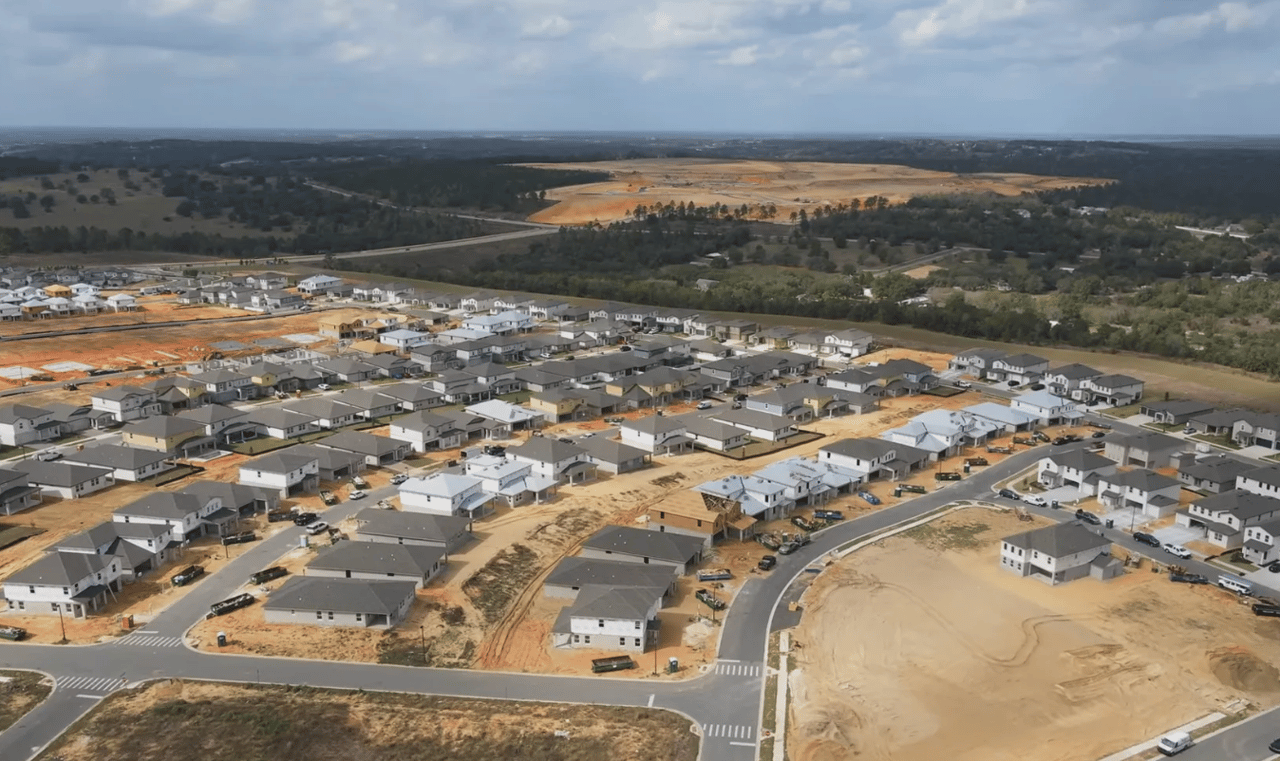
For new construction, ask about future phases, road connections, nearby planned uses, and the status of amenities. Review written plans and distinguish completed features from future proposals.
For resale, evaluate the existing surroundings and check whether nearby vacant land has planned development. Established landscaping does not guarantee the surrounding area will stay the same.
Minneola's Planning and Zoning Department and interactive land-use map are useful starting points for questions about development. Confirm whether the property is within city limits or another jurisdiction.
8. Test Your Everyday Routes
Location matters whether a home is new or resale.
From each property, map the places you will actually use: work, schools, groceries, medical appointments, and regular activities. Check the drive during your normal travel window.
Compare the neighborhood entrance and the route you will use after moving in. A temporary construction entrance or model-home access may differ from your finished-home route.
Verify public-school assignments for the exact property, and confirm private-school enrollment separately. Neither a Minneola address nor proximity to a school guarantees a particular assignment or admission.
9. Understand the Contract and Your Representation
Before visiting a builder or registering online, ask about its policy for recognizing your agent and any registration requirements.
A builder's sales representative works for the builder. Ask who represents you and review any buyer-representation agreement so you understand services, compensation, and responsibilities.
For either purchase, have deposit obligations, inspection rights, deadlines, financing terms, and available remedies explained. Builder contracts can differ substantially from the contract used for a resale transaction.
If a provision is unclear or requires legal interpretation, have a Florida real estate attorney review it before you commit.
Which Option May Fit Your Priorities?
Your priority | What to explore |
|---|---|
Selecting finishes | A build-stage purchase with available design choices |
Moving on a defined schedule | Completed inventory and resale homes, with readiness and closing terms verified |
An existing pool or finished yard | Resale homes with those features, inspected for condition |
New systems and current layouts | New construction and recently built resale |
Lower initial cash needs | The full purchase, financing, and after-closing budget for each property |
Seeing the surrounding setting today | Completed neighborhoods, while still checking future nearby plans |
My approach is to compare a short list of specific homes rather than decide on one category before looking. Often, the best choice becomes clearer once we put the full costs, timing, and location side by side.
Frequently Asked Questions
Is new construction cheaper than resale in Minneola?
Not automatically. Compare the final new-home price and needed additions with the resale purchase price and expected repairs or changes. Include financing and ongoing expenses.
Can I negotiate on a new construction home?
Ask what flexibility is available for the specific home. It may involve price, upgrades, closing costs, or financing incentives. Availability changes by builder, property, and timing.
Do I need an inspection if the home is brand new?
I recommend one. Newly installed systems and new construction can still have issues worth identifying before closing. Coordinate access and inspection timing in advance.
Do all new Minneola homes have CDD fees?
Do not assume they do. Verify district boundaries and assessments for the exact parcel, whether the home is new or resale.
Will the seller's property taxes become my taxes?
Do not budget on that assumption. Lake County advises buyers that reassessment after a change of ownership can alter the tax obligation.
Should I use the builder's preferred lender?
Compare written loan offers and the conditions attached to incentives. Review the complete costs and payment terms before choosing.
Is resale the better choice if I need to move quickly?
It may be worth exploring, along with completed new homes. Confirm readiness, possession, and closing conditions for each property.
Compare Minneola Homes With a Clear Plan
The strongest decision comes from comparing homes that fit your life, then understanding what each one will cost and require.
A new home may offer the layout and selections you want. A resale home may already have the outdoor space, upgrades, or setting you prefer. The right fit depends on the details.
Thinking about buying in Minneola? Explore homes and connect with Cassidy McWherter to compare new construction and resale options around your budget, timeline, and everyday priorities.
About the Author
Cassidy McWherter is a real estate agent with The Agency FL, licensed in Florida and Utah. She serves buyers and sellers throughout Minneola, Montverde, Bella Collina, Clermont, and greater Orlando, with a focus on luxury homes, relocation, and new construction.
As a Central Florida resident and mom of three, Cassidy brings a practical perspective to choosing a home—combining property guidance with the everyday details that help buyers get to know an area.
Sources and Helpful Links
- CFPB: Compare Loan Estimates
- Lake County Property Appraiser: Tax Estimator
- Lake County Property Appraiser: Save Our Homes and Portability FAQ
- City of Minneola: CDDs
- City of Minneola: Planning and Zoning
- Florida Insurance Consumer Advocate: Home Inspection 101
- Florida Department of Financial Services: Homeowners Insurance
Published October 2026. Incentives, inventory, financing terms, and community charges vary. The numerical example is illustrative; obtain current property-specific information for a purchase decision.